

Guide to Phonics
Phonics is essential for children learning to read because it provides the foundation for decoding words and developing fluent reading skills; as the Department for Education states, ‘For beginning readers and pupils with very low proficiency in reading, teaching will focus on word reading, and especially systematic synthetic phonics.’ The Reading Framework, (DfE, July 2023)
In this guide, we answer key questions about phonics — its importance, the jargon, how to use decodable books, the relationship with book bands, and how both teachers and parents can support phonics learning. Wherever useful, we link to relevant resources (for example, decodable and scheme books available from School Bargain Bookshop).
What is phonics and why is it important?
Phonics is a method of teaching reading whereby children learn to map letters (graphemes) to sounds (phonemes), and then blend those sounds to read words (decoding). It also supports spelling by enabling children to segment spoken words into their individual phonemes and match them to written letters.
Phonics is important because it gives children (and adults!) a reliable tool for reading new words independently, rather than relying on guessing or memorising whole words.
The phonics screening check is used to assess whether children have reached a basic standard of decoding ability. Pupils take the screening check at the end of year 1, typically aged 6. Pupils who do not meet the expected standard take the check again at the end of year 2, typically aged 7. The 2024/25 phonics screening check results showed 80 % of year 1 pupils met the expected standard — a sizable rise from the 58% who passed when the check began in 2012.
A substantial body of evidence shows that systematic synthetic phonics is the most effective way for children to learn to read, underscoring its significant impact on early reading attainment. Since decoding is fundamental to fluent reading, phonics is widely recognised as a cornerstone of literacy instruction.
What key terminology is used in teaching phonics
Glossary of common terms:
|
Term |
Definition / Meaning |
|
Phoneme |
The smallest distinct sound unit in speech |
|
Grapheme |
A letter or letter group that represents a phoneme |
|
Systematic Synthetic Phonics (SSP) |
Systematic synthetic phonics is a structured method |
|
Digraph |
A two-letter grapheme that represents one |
|
Trigraph |
A three-letter grapheme that represents one |
|
Quadgraph |
A four-letter grapheme that represents one phoneme |
|
Split Digraph |
A digraph that is split in half by a consonant in the |
|
Adjacent Consonants
|
Adjacent consonants are two or more consonant |
|
Consonant and Vowel Digraphs
|
Two-letter digraphs can either be two consonants, |
|
Blending |
Joining individual phonemes to form a word |
|
Segmenting |
Splitting a word into its individual phonemes |
|
High Frequency Words |
High frequency words are the common words writing, and which children need to recognise |
|
Tricky Words |
Also know as ‘common misconception words’, tricky |
|
Onset / Rime |
Onset is the initial consonant(s) of a syllable; rime is |
|
A book in which the vocabulary is controlled so that |
|
|
A graded sequence of books, often colour-coded or |
|
|
Book bands are a colour-coded system, originally |
|
|
AR is a subscription-based programme that guides |
What is a synthetic, systematic phonics programme
Synthetic phonics teaches children to synthesise, or blend, individual phonemes to read whole words, while systematic phonics refers to delivering this instruction in a planned, sequential order. Schools typically use programmes from the government’s list of validated SSP programmes. Using one of these high-quality programmes ensures frequent review, cumulative practice, and carefully managed progression, avoiding teaching too many new sounds at once.
All state-funded primary schools in England can apply to an English Hub for support with early reading: eligible schools may receive funding (up to £6,000 in priority areas), towards resources/training for a validated phonics programme, and expert CPD. To apply, simply complete a self-referral form via your local English Hub and then attend a briefing or audit before support begins.
What is Letters and Sounds?
The 2007 Letters and Sounds Framework is a systematic approach to teaching phonics, produced by the Department for Education and used by many schools in the UK. It sets out to provide schools with a basis for teaching systematic synthetic phonics and outlines six phases of phonics progression:
- Phase 1: General sound awareness, oral blending/segmentation
- Phase 2: Single letter–sound correspondences
- Phase 3: More graphemes and digraphs
- Phase 4: Blending and segmenting longer words
- Phase 5: Alternative spellings and reading more complex words
- Phase 6: Fluency and spelling
Although Letters and Sounds has never been statutory, over 50% of schools use this as the basis of their phonics teaching. However, it is not and has never been a full programme setting out in detail how phonics will be taught on a week-by-week basis. It relied upon schools building their own programme of resources around the handbook and in many cases updating the progression to bring it in line with current best practice. Although some schools have created their own teaching programme based on 2007 Letters and Sounds very successfully, this has not been the case for all schools.
In April 2021, the DfE announced changes that impacted the teaching of phonics in many schools as well as the phonic books and resources that are needed to support it. Moreover, it has been deemed no longer sufficient to simply state to Ofsted that your school is following Letters and Sounds — you need to show you are using a successful approach including a teaching programme, relevant resources, reading books and high-quality staff training that builds on this or another SSP teaching programme. Many schools choose to follow a programme from the list of DfE validated SSP programmes.
What role do decodable books play?
Decodable books play a key role in supporting phonics teaching and learning. The language used within these books is intentionally controlled so that most words can be decoded using the phonemes and graphemes pupils have learned. This gives children the practice and confidence to apply phonics skills while reading meaningful texts.
Decodable books help:
- Reinforce blending / segmenting in context
- Build reading fluency
- Consolidate phonics learning at the end of each phase
- Reduce reliance on guesswork or picture cues
- Give children success early, boosting motivation and increasing enjoyment
Decodable texts should be carefully matched to the phonics phase a child is working in and many publishers produce decodable readers aligned to Letters and Sounds phases.
Find decodable readers within our Phonics Collections.
Can book bands be used alongside phonics programmes?
Yes — Book Bands can be used alongside a phonics programme, but they need to be included thoughtfully. For pupils still learning to read and following an SSP programme, it is important that reading books are matched to the grapheme-phoneme correspondences (GPCs) they already know.
Pros
· Book Bands help schools and libraries organise a large stock of levelled readers, ensuring children have access to a wide range of texts at an appropriate level.
· They provide a clear visual indicator of progression and help guide children towards books that match their reading ability, reducing the risk of disengagement from choosing books that are too easy or too challenging.
· Book bands can help children learning English as an additional language (EAL) understand natural language patterns that are not found in phonics books.
· When moving beyond phonically matched texts (Turquoise to Black), book bands help ensure children encounter a steady increase in vocabulary, sentence complexity and text structure, supporting confident, fluent reading while still providing enough guidance to keep them motivated. They also prevent children from becoming ‘free readers’ too abruptly and reaching for texts far beyond their current ability, which can lead to frustration or a loss of confidence.
Considerations
· Some books may include vocabulary or irregular words beyond a child’s current phonics knowledge, which can frustrate less confident readers.
· Always check that a banded book is sufficiently decodable for a child’s stage of learning — ideally, most of the words should fall within their secure phonics knowledge.
The Reading Framework also suggests that children who are learning phonics should also be read to regularly to encourage reading for pleasure, vocabulary development and understanding. Book Bands can be very helpful here as children can take home an additional book that parents can read to their child, as well as the fully decodable book they should read themselves.
How can parents support phonics learning at home?
Schools can help parents play an active and effective role in reinforcing phonics learning by encouraging them to:
• Share decodable books matched to the child’s current phonics level, using texts aligned with the school’s chosen SSP programme.
• Establish short daily reading sessions (5–10 minutes) where the child reads aloud and the adult provides calm, supportive guidance.
• Engage their child in simple segmenting and blending games (e.g. I Spy with sounds, Sound Hop using letter cards placed on the floor, or Mystery Bag with objects children identify by decoding spoken sounds).
• Use flashcards or magnetic letters to revisit taught phonemes and graphemes.
• Support early writing practice by encouraging children to segment words and write the corresponding sounds.
• Avoid prompting children to guess words from pictures or context; instead, remind them to apply phonics knowledge to decode accurately.
• Maintain ongoing communication with school, ensuring home practice is aligned with current classroom teaching.
Read our Guide to Encouraging Reading for Pleasure at Home for more top tips and ideas.
What should children read after phonics?
Once children have a solid phonics foundation and can decode confidently, they are ready to transition to wider reading. Some good options:
- Scheme books / reading scheme titles that start to include less decodable vocabulary and more story variety.
- Reading Fluency Collections designed to help develop reading speed, accuracy, confidence, vocabulary, and stamina.
- Banded Books that match or are slightly above their current band, to encourage stretch.
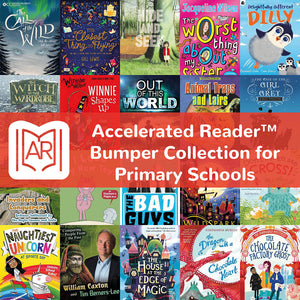
- Accelerated Reader™ books: many schools use AR programmes — once children can decode reliably, AR books help build comprehension, vocabulary, and reading volume.
- Hi-Lo (high-interest, low-level) titles, especially for reluctant or older readers, that provide engaging content with manageable text complexity.
- Picture Books that combine engaging illustrations with slightly more complex text to build comprehension and vocabulary. Read our Guide to Picture Books in Early Education to find out how they also support early learning, build essential literacy skills, and help every child connect with stories in meaningful, lasting ways.
Are there phonics books suitable for KS2 readers?
Absolutely. However, it is vital that these books are selected for being both engaging and age-appropriate.
The Reading Framework recommends using different resources for older pupils:
“The phonics programme a school chooses for catch-up provision should be an SSP programme, as for beginner readers. However, for older pupils who are still at the earliest stages of learning to read, schools might want to avoid SSP programmes specifically designed for younger pupils and consider age-appropriate lessons.”
These specialised phonic readers benefit from highly decodable, controlled texts with engaging, age-appropriate content and are part of reading schemes specifically designed to boost the phonics progress of KS2 students who have fallen behind.
You can find collections suitable for KS2 within our Phonics Books Collections, perfect for teachers or parents looking for texts tailored to readers aged 7+.
In Conclusion
Phonics is a powerful, evidence-based approach to teaching reading. When paired with well-matched decodable books and a systematic progression, (with useful scaffolding via Accelerated Reader™
or book bands), it helps most children build a firm foundation in word reading and begin the journey toward reading fluency.
For KS2 children who have fallen behind, as well as reluctant or struggling readers, specialised phonics books, carefully chosen decodable texts, and hi-lo books that match interest age to reading level can boost engagement, build confidence, and support steady reading progress.
Useful resources:
What to read next: A Guide to Book Bands — find out how to choose books that match your child’s reading level and keep them motivated to progress.
